


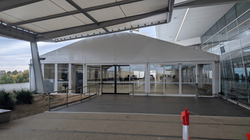


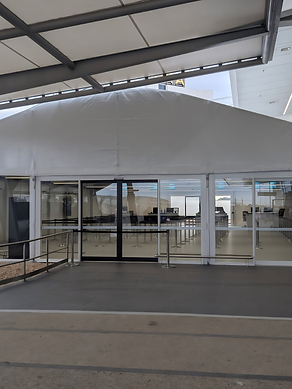
Modular Airport Terminals and Aircraft Maintenance Facilities
Modular aviation buildings enable rapid, scalable expansion for passenger, ground, and maintenance operations, delivering terminals, logistics facilities, and aircraft hangars far faster than traditional construction.
They are custom-engineered to meet Australian Standards, with configurable layouts, integrated security and services, and durable, site-specific performance.
Two core systems, Perth structure for flexible rapid deployment and the Cargo structure for large-span, heavy-duty applications, cover needs from temporary terminals and screening zones to baggage logistics and MRO bays. Delivered by Australian Temporary Structures in partnership with HR Structures, these solutions minimise disruption, control costs, and can be expanded or relocated as demand changes.
Need to expand passenger capacity at an airport, add check in zones, or support ground operations fast?
Modular aviation buildings provide a scalable, compliant solution for terminals, logistics structures, and aircraft maintenance delivered in a fraction of the time of traditional construction.
Fast, Flexible Infrastructure for Passenger, Ground & Maintenance Operations
Modular Terminal & Aviation Facilities
What Are Modular Terminal Buildings Used For?
Modular aviation structures are designed to support a wide range of operational needs across airport, passenger, and airside environments.
They are commonly used for:
-
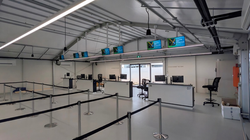
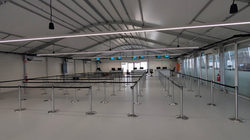
Passenger operations. Temporary terminals, check in zones, and waiting areas
-
Security screening. Controlled entry and processing zones
-
Arrivals halls. Efficient passenger flow and processing
-
Baggage handling areas and shelters. Protected logistics and sorting zones
-
Ground operations. Staff facilities and equipment hubs
-
Aircraft maintenance. Hangars, MRO bays, and aircraft workshops
-
Storage and logistics structures. Cargo and warehousing facilities
These solutions are ideal for regional, remote, or high-growth airport locations where speed and flexibility are critical.
How Do Modular Terminals Support Rapid Expansion?
When passenger demand increases or infrastructure upgrades are underway, modular buildings provide immediate capacity without long construction delays.
Key advantages include:
-
Fast off-site manufacturing and rapid installation
-
Minimal disruption to live operations
-
Scalable layouts that grow with demand
-
Relocatable structures for changing site requirements
This makes them a practical solution for both short-term expansion and long-term infrastructure planning.
Can These Buildings Be Customised for Operations?
Yes, every structure is tailored to meet specific operational and compliance requirements.
Typical customisations include:
-
Integrated security screening areas and controlled access points
-
Dedicated zones for check in, arrivals, and departures
-
Climate control systems for passenger comfort
-
Lighting, flooring, and internal fit-outs aligned with operational standards
-
Mezzanine levels, partitioning, and workflow-driven layouts
-
Buildings can be installed over existing infrastructure or on new sites, depending on project needs.


Modular Airport Terminals and Aircraft Maintenance Facilities
Are Modular Aviation Buildings Compliant and Durable?
All structures are engineered to meet relevant Australian Standards and are designed for demanding environments.
They feature:
-
High-strength aluminium frameworks
-
Weather-resistant roofing systems
-
Wind load engineering for site-specific conditions
-
Long-term durability for temporary, semi-permanent, or permanent use
This ensures safe, reliable performance across all operational conditions.
What Systems Are Best for Aviation Applications?
Perth System
-
Flexible & Rapid Deployment
-
Ideal for passenger processing areas, staff facilities, and operational zones where speed and adaptability are essential.
Cargo System
-
Large-Scale & Industrial Performance
-
Best suited for baggage handling, logistics structures, storage, aircraft hangars, and MRO bays, offering large clear spans and heavy-duty capability.
Where Can These Solutions Be Applied?
Modular aviation buildings are used across:
-
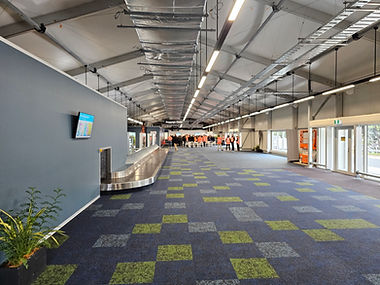
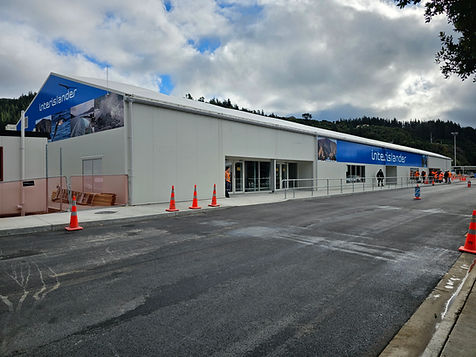
Temporary terminals and passenger processing facilities
-
Security screening and arrivals halls
-
Baggage handling and logistics zones
-
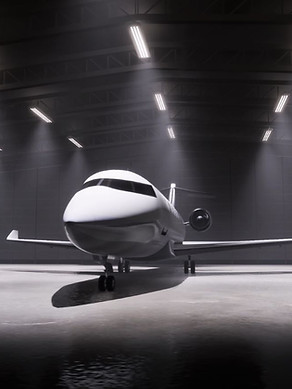
Aircraft hangars and helicopter shelters
-
Maintenance workshops and MRO facilities
-
Ground operations and support infrastructure
Why Choose Modular Over Traditional Construction?
-
Faster delivery. Operational in weeks, not months
-
Cost efficiency. Reduced capital expenditure
-
Flexibility. Adapt, expand, or relocate as needed
-
Minimal disruption. Ideal for live operational environments
Talk to Our Team
If you need a fast, flexible solution for passenger processing, logistics, or aircraft maintenance, Australian Temporary Structures can deliver a tailored outcome to suit your operational requirements.
Contact us today to discuss your project.
Engineering & Design Team Australian Temporary Structures
Backed by decades of experience in modular building systems, the ATS engineering team collaborates with global manufacturing partner HR Structures GmbH, ensuring all structures meet international and Australian performance standards. Their expertise spans large-span structures, aviation applications, and high-performance temporary infrastructure.
FAQs
Common Questions
Question: How quickly can we add passenger capacity with modular terminals, and will live operations be disrupted?
Short answer: Modular aviation buildings are manufactured off-site and installed rapidly, enabling facilities to become operational in weeks, not months. Their deployment is designed to minimise disruption to live airport operations. Layouts are scalable and structures are relocatable, making them effective for both short-term surge capacity and long-term planning.
Question: What’s the difference between the Perth and Cargo systems, and how do I choose?
Short answer: The Perth system prioritises flexible, rapid deployment and is ideal for passenger processing areas, staff facilities, and operational zones where speed and adaptability matter most. The Cargo system delivers large-span, heavy-duty performance suited to baggage handling, logistics, storage, aircraft hangars, and MRO bays. Choose Perth for fast, adaptable passenger-focused spaces; choose Cargo for industrial-scale, high-load applications.
Question: Can the buildings be tailored to our airport’s workflow and compliance needs?
Short answer: Yes. Customisations include integrated security screening and controlled access, dedicated check-in/arrivals/departures zones, climate control for passenger comfort, lighting and flooring aligned with operational standards, mezzanines, partitions, and workflow-driven layouts. Structures can be installed over existing infrastructure or on new sites to suit project constraints.
Question: Are modular aviation buildings compliant and durable enough for long-term use?
Short answer: All structures are engineered to relevant Australian Standards and designed for demanding environments. They feature high-strength aluminium frameworks, weather-resistant roofing, and wind-load engineering tailored to site conditions. They deliver long-term durability suitable for temporary, semi-permanent, or permanent applications.
Question: Who provides these solutions and what expertise backs the design?
Short answer: Australian Temporary Structures delivers these facilities in partnership with HR Structures GmbH. The ATS engineering and design team has decades of modular building experience, ensuring solutions meet both international and Australian performance standards across large-span, aviation, and high-performance temporary infrastructure.


